The Hero’s Journey Is Overrated

The cat is out of the bag, stories are persuasive.
You want to tell your story, you search on google how to tell your story, you think back to your college essay, but you decide to step up your game and incorporate:
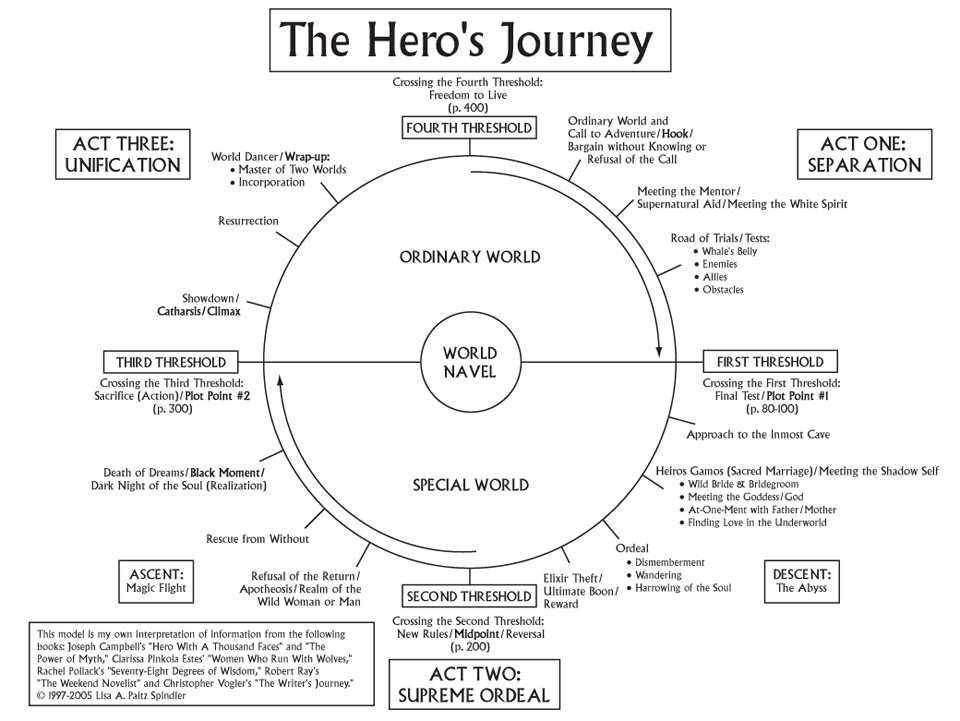
THE HERO'S QUEST
Of course, Joseph Campbell’s, “The Hero with a Thousand Faces”.
"It’s the reason that I love Batman Begins or any other movie that I watch for that matter. This is the secret code to storytelling that I need to use to promote myself."
After preparing with ChatGPT a very structurally sound and grammatically correct tale for this moment, how can you lose?
Then you tell an amazing story of immense suffering, overcoming adversity, and how you are now the hero that everyone should care about.
And it doesn’t land…
And you feel like a douche.
Why?
Because the Hero’s Journey is no longer a revelation — it’s a trope.
It sounds profound to the novice, but to everyone else it’s familiar in the worst way. When it misses, it doesn’t come off as epic. It comes off as self-absorbed, self-righteous, and oddly performative.
In business settings, it’s even worse.
It’s socially awkward.
People didn’t show up to witness your personal redemption arc.
They showed up to understand:
- What you’re building
- Why it matters
- Whether they trust you
Those are very different objectives.
The Hidden Problem With “Hero Stories” in Business
The Hero’s Journey centers you.
Business stories center the listener.
That mismatch creates friction.
In pitch rooms, founders using heroic framing often feel off — not because their experience isn’t real, but because the story is optimized for identity validation, not decision-making.
Great stories don’t ask:
“Aren’t you impressed by what I survived?”
They quietly answer:
“Here’s how the world actually works — and why this move now makes sense.”
I grew up in a small town where my parents worked two extra jobs at the local factory. My sister was sick as well and I had very little to means to support her. One day, a wealthy man came to me and asked me if I wanted to help my family...
None of that is actually true, but even if it was no one would actually care if that was my actual origin story for pitching. Did you?
So What Actually Works?
You don’t start with a template.
You start with intent.
Ask first:
- What am I trying to accomplish right now?
- What decision is this story meant to unlock?
- What tension does the listener already feel?
Different goals require different stories:
- Trust stories
- Pattern-recognition stories
- Compression stories
- Reframing stories
Great pitchers don’t have one story.
They have many, engineered for specific moments.
Not heroic.
Precise.
The Real Skill
You absorb stories constantly — myths, history, war stories, jokes, failures, throwaway moments.
You take note of your own experiences without glorifying them.
You catalog signal, not suffering.
Most of the time, the best stories aren’t impressive.
They’re intentional.
They:
- Hold attention
- Shift perception
- Do their job and get out of the way
That takes practice. Constant practice.
Want the Alternative?
If you want to learn a complete method for building a modular, chaos-proof pitch — one that adapts in real time instead of forcing you into a tired arc — check out:
No heroes required.