The Mental Game of Resilience: Bouncing Back from Business Failure
Entrepreneurship is a brutal climb. This article provides your playbook for reframing limiting beliefs about business failure and cultivating a bulletproof growth mindset.

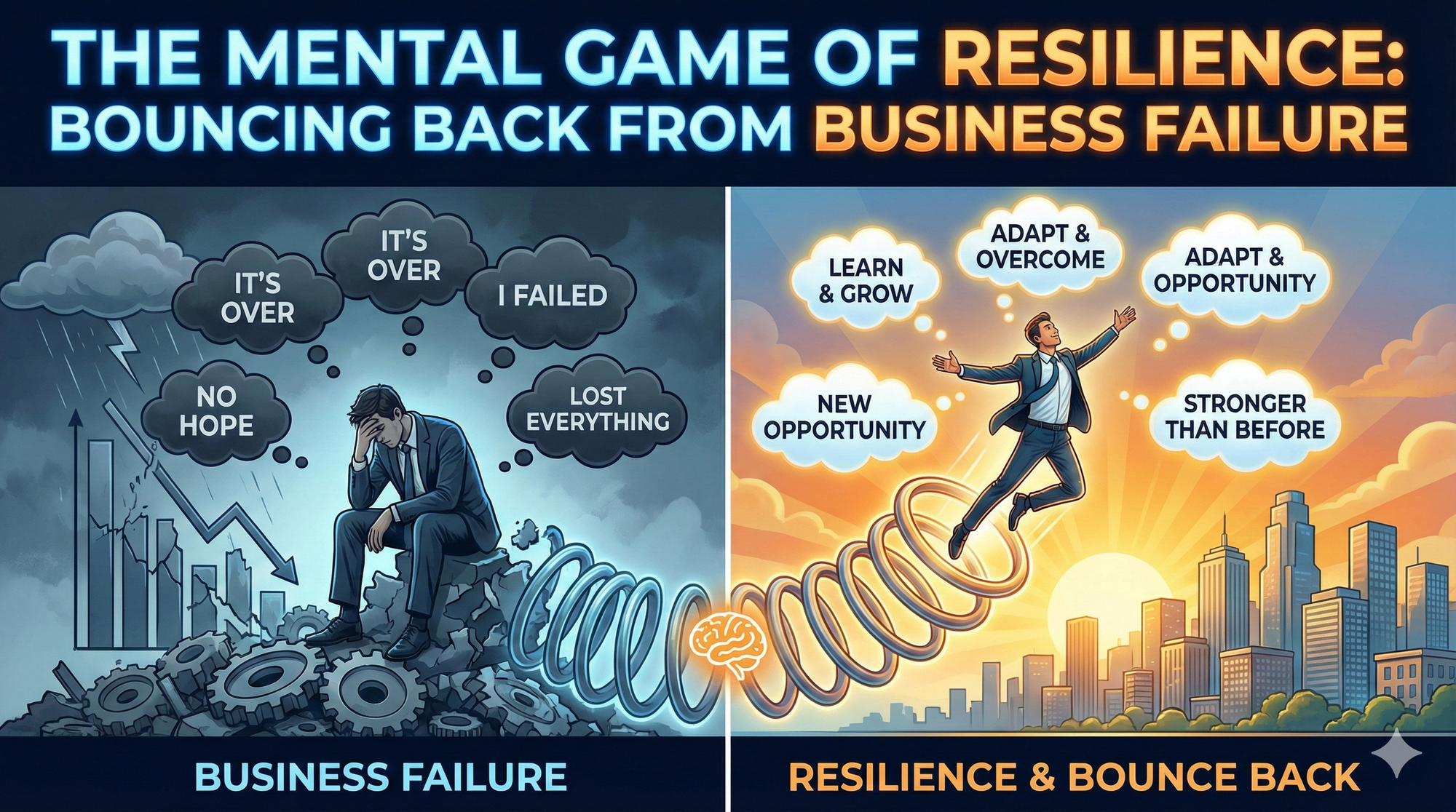
I. Introduction: The Entrepreneur's Inevitable Bruises
Let's be real. Entrepreneurship isn't a smooth ascent; it's a brutal climb, often punctuated by falls, scrapes, and the occasional full-blown face-plant. Setbacks aren't just possibilities; they're guaranteed. The real question isn't if you'll fail, but how you'll respond. This capacity to rebound—this gritty, unyielding quality—is what we call resilience for entrepreneurs.
This article isn't some fluffy motivational piece. It's a deep dive into the mental game, dissecting how our internal narratives, those insidious limiting beliefs, can amplify the sting of business failure. More importantly, it's your playbook for reframing those beliefs, cultivating a bulletproof growth mindset, and bouncing back stronger than ever.
Why Failure Feels Like a Fatal Blow: A Direct Answer
Business failure often feels like a fatal blow because of deeply ingrained limiting beliefs that equate setbacks with personal inadequacy, catastrophic loss, or a definitive end to one's entrepreneurial journey.
These beliefs transform a temporary event into a personal indictment, leading to shame, self-doubt, and a profound fear of future ventures. Overcoming this requires actively challenging these narratives, reframing failure as invaluable feedback, and cultivating a growth mindset that sees challenges as opportunities for learning and development.
II. Understanding Limiting Beliefs: The Invisible Chains of Setback
Limiting beliefs are those subconscious narratives we tell ourselves about our capabilities, the world, or the very nature of success and failure. They're not just thoughts; they're deeply ingrained convictions that act like psychological anchors, holding us back. In the entrepreneurial arena, these might sound like:
- "I'm not good enough to run a successful business."
- "Failure is a sign of my incompetence."
- "I'll never recover from this setback."
- "Taking risks always leads to pain."
These aren't just words; they're invisible chains, binding entrepreneurs to cycles of self-doubt and inaction, especially when the chips are down.
How They Exacerbate Failure: The Echo Chamber of Doubt
When you're staring down a business failure, these limiting beliefs don't just sit there passively; they scream. They transform a temporary setback into a personal indictment, leading to a cascade of shame, inadequacy, and a paralyzing fear of future ventures. This psychological burden isn't just unpleasant; it leads to self-sabotage, prolonged recovery periods, and an unwillingness to take the necessary risks for innovation and growth. If you believe you're inherently incapable, you'll never learn from your mistakes, effectively guaranteeing you'll stay stuck.
Identifying Your Own Limiting Beliefs: Unmasking the Saboteur
Uncovering these subconscious thought patterns is the first, non-negotiable step towards overcoming fear of failure. Seriously, dig in. Examine the narratives you construct around past failures. What assumptions do you make about your capabilities when facing challenges? What are your deepest fears concerning new projects or business pivots?
Journaling, honest self-reflection, and seeking feedback from trusted mentors can illuminate these hidden saboteurs. This is your Inner Arena work at its most critical.
III. The Power of Reframe: Shifting Your Narrative, Shifting Your Reality
Cognitive Restructuring: Rewiring Your Brain for Resilience
Cognitive restructuring isn't some touchy-feely concept; it's a powerful, evidence-based technique. It's about actively identifying and challenging those irrational or unhelpful thoughts, then replacing them with more realistic and adaptive ones. In the brutal context of business failure, this means consciously questioning the validity of your limiting beliefs and choosing to interpret events in a more constructive light. It's about taking control of your internal dialogue.
Failure as a Learning Opportunity: The Ultimate MBA
Instead of viewing failure as an end, a resilient entrepreneur sees it as the most expensive, yet most valuable, MBA you'll ever get. Every misstep provides invaluable data, revealing what doesn't work and guiding future decisions. This perspective is central to fostering a growth mindset in business, where challenges are embraced as avenues for development rather than avoided as threats to self-worth. It's about shifting from "I failed" to "I learned." This is the core of Carol Dweck's groundbreaking work on Mindset [1].
Actionable Strategies for Reframing: Your Mental Gym
- Challenge Negative Self-Talk: When a limiting belief surfaces, hit it with a barrage of questions: Is there concrete evidence to support it? What alternative, more empowering perspectives exist? Techniques like thought records, where you document negative thoughts and systematically challenge them, are invaluable. This is the essence of Rational Emotive Behavioral Therapy (REBT) in action.
- Focus on Controllables: During times of crisis, it's easy to feel overwhelmed by factors beyond your influence. Shift your focus to what you can influence—your effort, your learning, and your response. This empowers you and mitigates feelings of helplessness.
- Embrace the Growth Mindset: Believe that abilities and intelligence can be developed through dedication and hard work. For entrepreneurs, this means viewing challenges as opportunities to grow and improve, rather than as fixed indicators of talent. This is crucial for building resilience for entrepreneurs.
IV. Building a Resilient Toolkit: Practical Steps for Recovery
1. Develop a Support System: Your Inner Circle
No entrepreneur is an island. Build a strong network of mentors, peers, and personal connections. They provide emotional support, practical advice, and accountability. Sharing experiences with others who have faced similar challenges can normalize setbacks and offer fresh perspectives. This is where your Inner Arena extends to your outer network.
2. Practice Self-Compassion: Be Your Own Best Advocate
It's easy to be brutal on yourself after a business failure. But practicing self-compassion—treating yourself with the same kindness and understanding you would offer a friend—is vital for recovery. This involves acknowledging your pain without judgment and recognizing that imperfection is part of the human experience. Brené Brown's The Gifts of Imperfection is a powerful guide here [2].
3. Set Realistic Expectations: The Marathon, Not the Sprint
Recovery from business failure is a process, not a single event. There will be good days and bad days. Setting realistic expectations for your emotional and professional recovery prevents further frustration and allows for gradual healing and rebuilding.
4. Celebrate Small Wins: Fueling the Comeback
Even amidst significant setbacks, identifying and celebrating small victories can help maintain momentum and motivation. These could be small learning achievements, successful networking interactions, or even just getting through a challenging day. Recognizing progress, no matter how minor, reinforces a positive feedback loop and fuels your comeback.
V. Conclusion: The Unbreakable Entrepreneur
Conquering limiting beliefs about business failure isn't about avoiding the fall; it's about mastering the art of the rebound. It's about understanding that resilience isn't an innate trait, but a muscle you build through conscious effort and strategic reframing. By dismantling those invisible chains, you gain the profound freedom to take calculated risks, innovate without inhibition, and embrace the full spectrum of your potential. The mental game of resilience is the ultimate competitive advantage. Master it, and you become the unbreakable entrepreneur, ready to turn every setback into a launchpad for your next great success.
Why I Wrote This
My experiences, particularly through the crucible of entrepreneurship, have consistently revealed a powerful truth: the most significant barriers aren't external market forces, but the internal narratives we construct around failure. I've watched brilliant minds get stuck, not by market forces, but by their own subconscious beliefs about what failure means. This article is my attempt to demystify these intertwined fears, offering a practical, actionable framework for anyone ready to break free from self-imposed limitations and truly thrive. Because the world needs your boldest ideas, and you deserve the freedom to pursue them.
Recommended Resources
For those ready to dive deeper and continue their journey of self-upgrading, these resources offer profound insights and practical tools:
- Mindset: The New Psychology of Success by Carol S. Dweck: Explores the profound impact of fixed vs. growth mindsets on achievement and personal development, offering insights crucial for navigating failure and success. Amazon Link [1]
- The Gifts of Imperfection: Let Go of Who You Think You're Supposed to Be and Embrace Who You Are by Brené Brown: A powerful guide to cultivating self-compassion, courage, and connection, essential for navigating the vulnerability of entrepreneurship. Amazon Link [2]
- What Resilience Means, and Why It Matters - Harvard Business Review: An insightful article defining resilience and highlighting its critical importance in both personal and professional contexts. Read Article [3]