Common Limiting Beliefs in Higher Education and Corporate Settings
The pressure to appear perfect in higher education and corporate settings breeds limiting beliefs. Discover how these narratives stifle innovation and how to dismantle them.

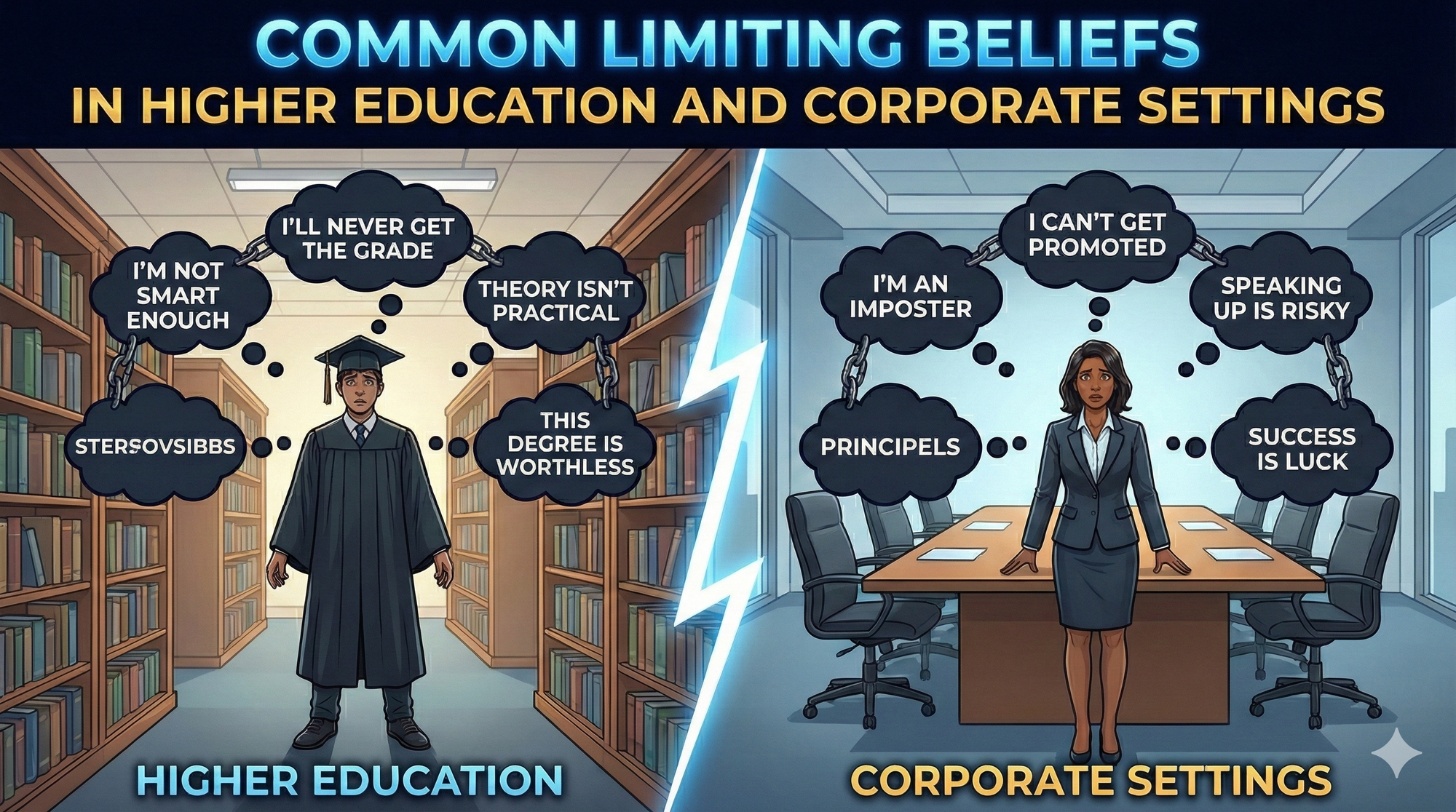
I. Introduction: The Pressure Cooker of Perfection
Walk onto any university campus, especially a top-tier one like Stanford , or step into the polished halls of a major corporation, and you'll feel it: an unspoken, yet palpable, pressure to always put your "best foot forward." It's a culture that often demands perfection, where admitting a weakness or asking for help can feel like a career-ending vulnerability.
This environment, while fostering ambition, is also a breeding ground for insidious limiting beliefs. These aren't just personal hang-ups; they're often systemic, ingrained narratives that can stifle innovation, hinder growth, and lead to burnout. This article will dissect these common limiting beliefs, exploring how they manifest in higher education and corporate settings, and, more importantly, how to dismantle them to foster genuine growth and psychological safety.
Why "Putting Your Best Foot Forward" Can Be a Trap: A Direct Answer
The pervasive culture of "putting your best foot forward" in higher education and corporate settings can be a trap because it discourages vulnerability and the admission of lacking, which are essential for learning and growth.
This environment fosters limiting beliefs such as "I must always appear competent," "Asking for help is a sign of weakness," or "My worth is tied to flawless performance." These beliefs create psychological barriers that prevent individuals from taking risks, seeking feedback, and engaging in the self-upgrading necessary for true innovation and leadership, ultimately hindering both personal and organizational progress.
II. The Unseen Costs of a Flawless Facade
In environments where success is highly visible and competition is fierce, the narrative often becomes one of unwavering competence. As I've observed, particularly in academic and corporate settings, there's a strong aversion to admitting you don't know something, or that you're struggling. This isn't just about ego; it's often rooted in a fear of judgment, a belief that any perceived flaw will diminish your value or opportunities. This pressure creates a fertile ground for specific limiting beliefs to take root, silently dictating behavior and decision-making.
Limiting Beliefs That Thrive in High-Pressure Environments
These are the narratives that keep brilliant minds from reaching their full potential in academia and the corporate world:
- "I must always appear competent": This belief leads to a reluctance to ask questions, seek clarification, or admit mistakes, stifling learning and innovation. It's a direct counter to the growth mindset.
- "Asking for help is a sign of weakness": This prevents individuals from leveraging collective intelligence, leading to isolation and increased stress. It undermines the very idea of team collaboration.
- "My worth is tied to flawless performance": This creates an unhealthy obsession with perfection, leading to burnout, fear of failure, and an inability to take calculated risks. It's a major contributor to limiting beliefs about failure and success.
- "I can't show vulnerability": This belief hinders authentic connection and psychological safety, making it difficult to build trust and foster a truly collaborative environment.
- "Innovation means having all the answers": This stifles creative problem-solving, as individuals become afraid to propose half-formed ideas or engage in exploratory thinking.
III. Fostering Psychological Safety: Actionable Strategies
Breaking free from these systemic limiting beliefs requires a conscious effort, not just from individuals, but from leaders and institutions. It's about creating environments where vulnerability is seen as a strength, and learning is prioritized over appearing perfect. This is crucial work within your Inner Arena, extending beyond personal self-upgrading to organizational transformation.
1. Lead with Vulnerability
Leaders must model the behavior they wish to see. When leaders admit mistakes, ask for help, or share their own learning curves, it signals to their teams that it's safe to do the same. This isn't about oversharing; it's about authentic leadership that builds trust and psychological safety. This directly counters the "I must always appear competent" narrative.
2. Reframe Failure as Learning
Shift the narrative around failure from a catastrophic event to a valuable learning opportunity. Implement post-mortems that focus on lessons learned rather than blame. Celebrate intelligent failures that lead to new insights. This helps dismantle the "my worth is tied to flawless performance" belief and encourages calculated risk-taking. This is a core component of building resilience for entrepreneurs.
3. Actively Solicit and Reward Questions
Create an environment where asking questions is not just tolerated, but actively encouraged and rewarded. Leaders should regularly ask, "What questions do you have?" and genuinely listen to the responses. This combats the "asking for help is a sign of weakness" belief and fosters a culture of continuous inquiry.
4. Implement Structured Feedback Mechanisms
Beyond annual reviews, create regular, low-stakes opportunities for constructive feedback. This could be peer feedback, 360-degree reviews, or informal check-ins. The goal is to normalize feedback as a tool for growth, rather than a judgment of inadequacy. This helps individuals understand that their development is a continuous process, not a static state of perfection.
5. Promote a Growth Mindset (Beyond the Buzzword)
While "growth mindset" is a popular term, truly embedding it means celebrating effort, process, and learning over innate talent or immediate results. It means recognizing that abilities can be developed through dedication and hard work. This directly challenges beliefs that limit capability and encourages individuals to embrace challenges. Carol Dweck's work on Mindset is a powerful resource here.
IV. Conclusion: Building Cultures of Courage and Growth
The high-pressure environments of higher education and corporate settings, while demanding, don't have to be breeding grounds for limiting beliefs. By consciously challenging the narratives of perfection and fostering cultures of psychological safety, leaders can unlock the full potential of their teams and organizations. This isn't just about improving performance; it's about creating environments where individuals feel safe to learn, grow, and contribute their authentic selves. The future of innovation and leadership depends on our ability to dismantle these invisible walls and build cultures of courage and continuous self-upgrading.
Why I Wrote This
My experiences, particularly during my time at Stanford Business School, provided a unique vantage point into the subtle yet powerful ways institutional cultures can inadvertently foster limiting beliefs. I observed how the pressure to excel could lead to a reluctance to admit vulnerability, hindering both individual and collective growth. This article is my attempt to shed light on these dynamics and offer actionable strategies for leaders to cultivate environments where authenticity and continuous learning are celebrated, not suppressed.
Recommended Resources
To further explore the concepts of psychological safety, growth mindset, and leadership in high-pressure environments, these resources are invaluable:
- The Fearless Organization: Creating Psychological Safety in the Workplace for Learning, Innovation, and Growth by Amy Edmondson: A foundational text on psychological safety, explaining its importance and how to cultivate it. Amazon Link
- Mindset: The New Psychology of Success by Carol Dweck: Explores the profound impact of fixed vs. growth mindsets on achievement and personal development. Amazon Link
- Dare to Lead by Brené Brown: Brown's work on vulnerability, courage, and leadership offers powerful insights into building brave cultures. Amazon Link
- Radical Candor: Be a Kick-Ass Boss Without Losing Your Humanity by Kim Scott: Provides a framework for giving and receiving feedback that fosters growth and trust, essential in high-performance settings. Amazon Link