Beyond the Comfort Zone: Conquering Limiting Beliefs About Failure and Success
As entrepreneurs, we fear both failure and success. This guide dissects these paradoxical limiting beliefs, offering a battle plan to dismantle them.

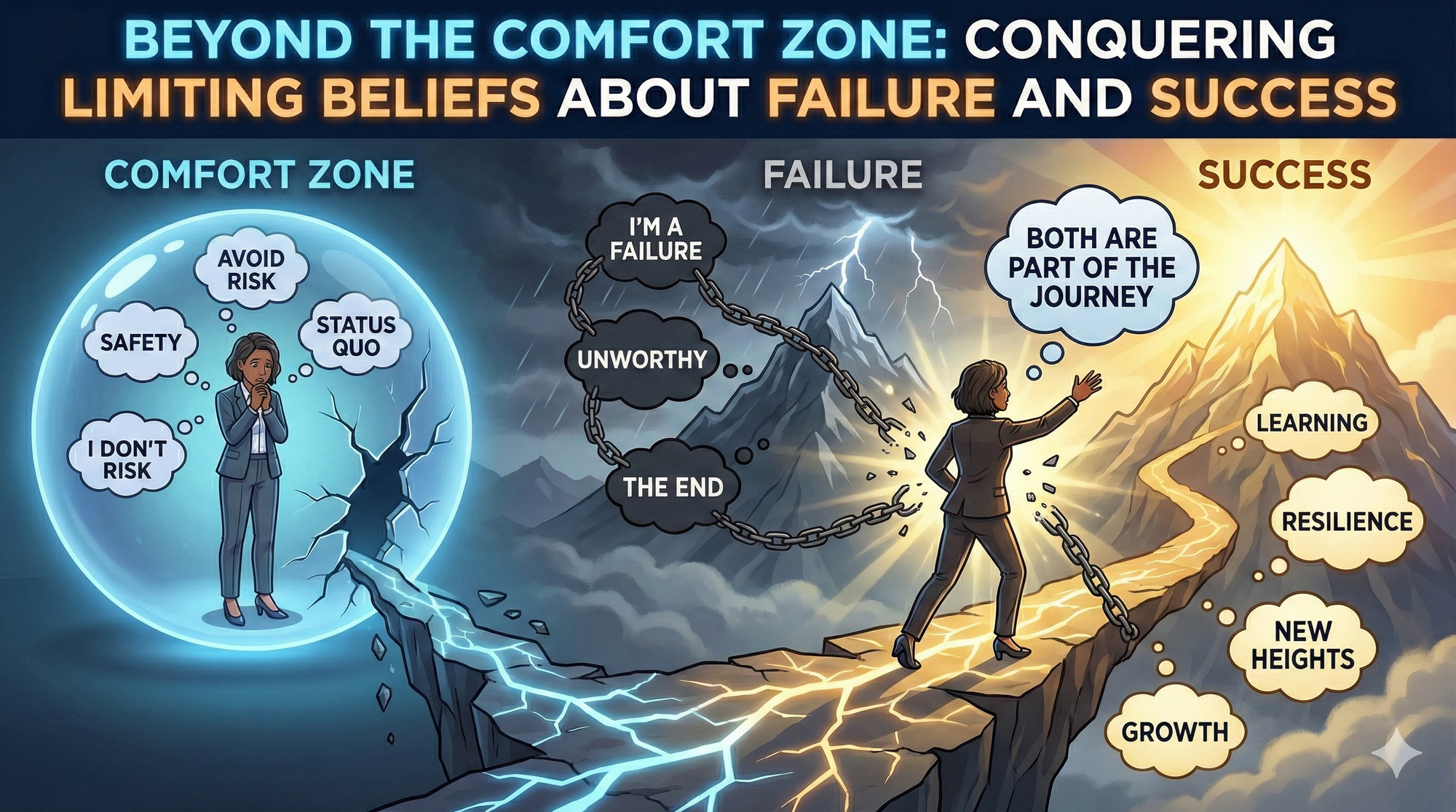
I. Introduction: The Double-Edged Sword of Ambition
Let's be honest. As entrepreneurs and leaders, we're wired for ambition. We chase big goals, disrupt industries, and constantly push the envelope. But what if that very ambition is shadowed by a silent, insidious force? I'm talking about the intertwined, often paradoxical, limiting beliefs about failure and success. It's not just the fear of falling flat on your face; it's also a subtle, unconscious apprehension towards the very success you crave. This dualistic fear creates invisible barriers, stifling innovation, hindering growth, and keeping you playing small.
This article isn't just going to dissect these intertwined fears; it's your battle plan to dismantle them, fostering a mindset that doesn't just tolerate success, but demands it.
Why We Fear Both Failure and Success: A Direct Answer
We fear both failure and success because both represent a departure from the known, the comfortable. Fear of failure often stems from a narrative that equates failure with personal inadequacy or catastrophic loss. Fear of success, while less obvious, can arise from anxieties about increased responsibility, the pressure to maintain a higher standard, the potential for social isolation, or even a subconscious belief that you don't deserve it.
Both fears are limiting beliefs that keep us trapped in our comfort zones, preventing us from fully engaging in the Inner Arena and realizing our true potential.
II. The Paradox of Fearing Success: When Winning Feels Like Losing
While the fear of failure is a well-worn path, the fear of success in entrepreneurship is a more nuanced beast. It's the entrepreneur who pulls back just as a deal is about to close, the leader who avoids a promotion, or the innovator who never quite launches their groundbreaking idea. This isn't about lacking drive; it's about a subconscious narrative that associates success with negative outcomes. It can manifest as:
- Fear of Increased Responsibility: "If I succeed, I'll have too much on my plate, and I'll burn out."
- Fear of Losing Relationships: "If I become too successful, my friends/family won't understand me, or I'll lose touch."
- Fear of Not Being Able to Maintain It: "What if I get to the top and can't stay there? The fall will be even harder."
- Undeservingness: A deep-seated belief that you don't actually deserve the success, leading to self-sabotage. This often ties back to limiting beliefs about self-worth.
This fear can lead to insidious self-sabotage, procrastination, and an inability to capitalize on the very opportunities you've worked so hard to create. As Psychology Today explores, the fear of success can subtly sabotage your life goals [1].
III. Embracing Failure: The Ultimate Feedback Loop
Conversely, a healthy embracing failure mindset views setbacks not as definitive endings, but as invaluable learning experiences. This perspective is crucial for innovation and resilience. Limiting beliefs often paint failure as a personal indictment rather than a natural part of the growth process. If you believe "failure is final," you'll never take the risks necessary for true breakthrough. By reframing failure, you extract lessons, adapt strategies, and move forward with renewed vigor. As the Harvard Business Review highlights, learning from failure requires specific strategies and a willingness to see it as feedback, not a verdict [2].
IV. Actionable Strategies: Your Blueprint for Breakthrough
To conquer these intertwined fears, you need a precise, actionable blueprint. This isn't about ignoring the risks; it's about recalibrating your internal compass to navigate them with courage and clarity.
1. Identify and Challenge Your Beliefs: Name the Beast
The first step is always awareness. What specific narratives are you telling yourself about failure? What negative outcomes do you truly associate with success? Journaling, honest self-reflection, and even discussing these fears with a trusted mentor can bring them to light. Once identified, challenge them. Are these beliefs truly universal truths, or are they self-imposed restrictions born from past experiences or societal conditioning? This is your Inner Arena work in action.
2. Redefine Failure and Success: Rewrite the Rules
Shift your definitions. Failure isn't a personal indictment; it's feedback, a data point, an opportunity to refine your approach. Success isn't a static destination; it's a continuous journey of learning, contribution, and growth. This redefinition alleviates the crushing pressure associated with both concepts. It's about adopting a growth mindset, as championed by Carol S. Dweck in her seminal work, Mindset: The New Psychology of Success [3].
3. Visualize and Plan for Both Outcomes: Strategic Preparedness
Mentally prepare for both potential failures and successes. For failure, consider contingency plans: "If X happens, how will I recover? What lessons will I extract?" For success, visualize the positive impacts, the new responsibilities, and how you will manage them. This proactive approach reduces anxiety and builds confidence, transforming uncertainty into strategic preparedness.
4. Seek Mentorship and Support: Don't Go It Alone
Engage with mentors who have navigated similar challenges. Their insights and experiences are invaluable. A strong support network—peers, coaches, advisors—can offer encouragement, accountability, and a reality check when your internal narratives start to spiral. Remember, the journey of an entrepreneur is not meant to be a solitary one.
5. Practice Unconditional Self-Acceptance & Self-Compassion: Your Inner Anchor
Be kind to yourself. The entrepreneurial journey is rarely linear. Acknowledge your efforts, learn from your mistakes without harsh self-criticism, and celebrate small victories along the way. This is the essence of Unconditional Self-Acceptance and self-compassion, building an inner anchor that keeps you steady through the inevitable storms.
V. Conclusion: The Freedom to Dare Greatly
Conquering limiting beliefs about failure and success isn't about becoming fearless; it's about becoming resilient. It's about understanding that both failure and success are integral parts of the entrepreneurial journey, not endpoints. By dismantling these invisible walls, you gain the profound freedom to truly dare greatly—to take calculated risks, to innovate without inhibition, and to embrace the full spectrum of your potential. Step beyond the comfort zone, rewrite your narratives, and claim the success that awaits you. Your Inner Arena is ready for your next courageous move.
Why I Wrote This
My experiences, particularly through the crucible of entrepreneurship, have consistently revealed a powerful truth: the most significant barriers aren't external market forces, but the internal narratives we construct around failure and success. I've seen brilliant minds paralyzed by the fear of both, unable to fully step into their power. This article is my attempt to demystify these intertwined fears, offering a practical, actionable framework for anyone ready to break free from self-imposed limitations and truly thrive. Because the world needs your boldest ideas, and you deserve the freedom to pursue them.
Recommended Resources
For those ready to dive deeper and continue their journey of self-upgrading, these resources offer profound insights and practical tools:
- The Fear of Success Can Sabotage Your Life Goals - Psychology Today: An insightful article exploring the subtle ways fear of success can manifest and hinder progress. Read Article
- Strategies for Learning from Failure - Harvard Business Review: A practical guide on how to transform setbacks into valuable learning experiences. Read Article
- Mindset: The New Psychology of Success by Carol S. Dweck: Explores the profound impact of fixed vs. growth mindsets on achievement and personal development, offering insights crucial for navigating failure and success. Amazon Link
- Daring Greatly: How the Courage to Be Vulnerable Transforms the Way We Live, Love, Parent, and Lead by Brené Brown: While not directly listed, this book's themes of vulnerability and courage are highly relevant to overcoming the fear of both failure and success. Amazon Link